
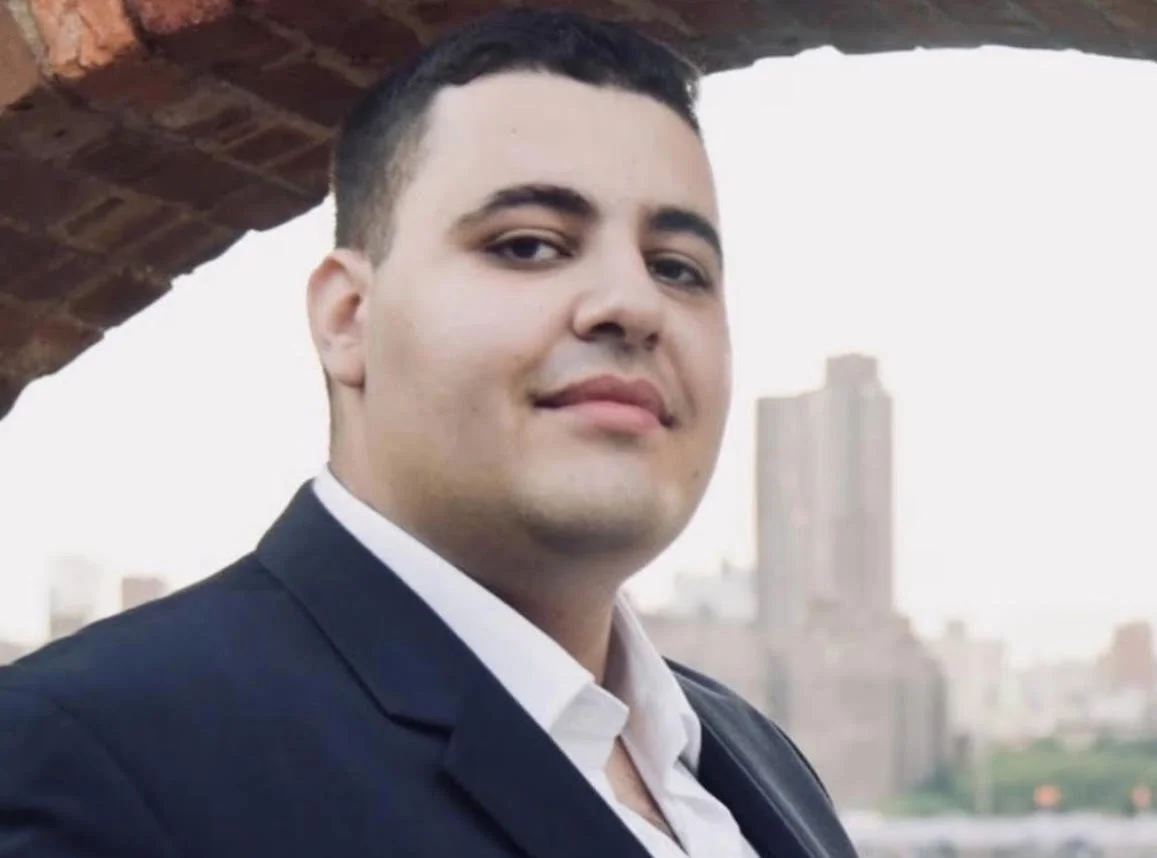
Gabriel Blinder, Esq.
Founder and CEO of Critical Sports and Entertainment, Inc. and Priveo Inc
Where did you grow up, and what part of your upbringing shaped you the most?
What began as a passion project has evolved into something more. We’re proud of where we’ve been and even more excited for what’s ahead. What sets us apart isn’t just our process—it’s the intention behind it. We take time to understand, explore, and create with purpose at every turn.
Looking back, did you show any signs as a kid or teenager that you weren’t built for the traditional path?
Absolutely. I always questioned structures instead of accepting them. If everyone walked left, I wanted to know what was on the right. I was never comfortable being boxed into one lane—whether it was in school, sports, or any traditional environment. I always had an instinct for organizing, building, and trying to operate something of my own, especially more so with my entire immediate family being entrepreneurs.
Before you ever started a business, what did you think success looked like—and has that definition changed?
I used to think success was about achieving a certain position, title, or salary. Traditional benchmarks. But the deeper I got into my career, the more I realized that none of that defines impact. Today, success to me is about building things that outlive me such as platforms, opportunities, pathways—especially in industries like sports and entertainment where so many people never get a fair shot.
What’s the moment you realized you needed to become an entrepreneur, not an employee?
The moment I realized I was spending more time solving problems outside my job description than inside it. Initially working at NBC after law school, I learned that my skills and expertise were more beneficial in a personal venture than working for a large corporate firm. In other words, I kept seeing inefficiencies, gaps, and opportunities to create something better—and eventually it clicked that the only way to truly build the solutions I envisioned was to step out and create my own ecosystem. That’s what led to Critical.
What was your family’s attitude toward work, money, and success when you were young?
My family’s mentality was simple: work hard, stay grounded, and don’t expect anything to be handed to you. Success wasn’t defined by luxury or status, it was defined by stability, discipline, and taking care of the people around you. That foundation still guides me, even though my world now involves arenas, major partners, investors, and large-scale event properties.
Who was the first person who pushed you, challenged you, or inspired you to think bigger than your environment?
There were a few people, but one stands out—my mother who didn’t let me play small. She told me early on that the world wouldn’t hand me permission to dream big; I’d have to take it. She pushed me to see beyond the neighborhood, beyond the conventional paths, and to realize that if I built with intention, I could shape entire ecosystems—not just participate in them.
What’s the hardest reality check you faced in your field that nobody warned you about?
That doing the right thing doesn’t always get rewarded immediately. In sports and entertainment, you can give people opportunity, put athletes first, build the infrastructure the right way and still face politics, delays, and setbacks. You have to have a deep internal engine to keep going even when the external validation isn’t there yet.
What setback or failure almost made you walk away—and what pulled you back in?
There was a stretch early on where resources were tight, partnerships fell through, and it felt like every door was closing at the same time. What pulled me back was the realization that if I quit, the entire vision dies. The athletes don't get the opportunities, the events don’t get built, the communities don’t benefit, and the ecosystem never evolves. That responsibility of knowing it’s bigger than me is what kept me going.
What’s a belief you had about business early on that turned out to be completely wrong?
I used to think that if you work hard and have a strong idea, people will naturally support it. That’s not true. You have to build credibility, relationships, proof of concept, and momentum. You have to persuade, demonstrate, and outwork. The world rewards execution, not potential. When it’s all said and done, what impact do you want your work to have on your community, your industry, or the next generation? I want to redefine what access looks like in sports and entertainment. I want to build systems that give athletes, creators, and communities opportunities they’ve historically been excluded from. If the next generation grows up seeing more pathways, more representation, more mobility—if people from places like Brooklyn look at Critical and say, “someone built that from where I’m from, and now I can too", that’s the legacy I want to leave.